Malu° Health Group.
Building the foundations of a high-trust mental health organisation.
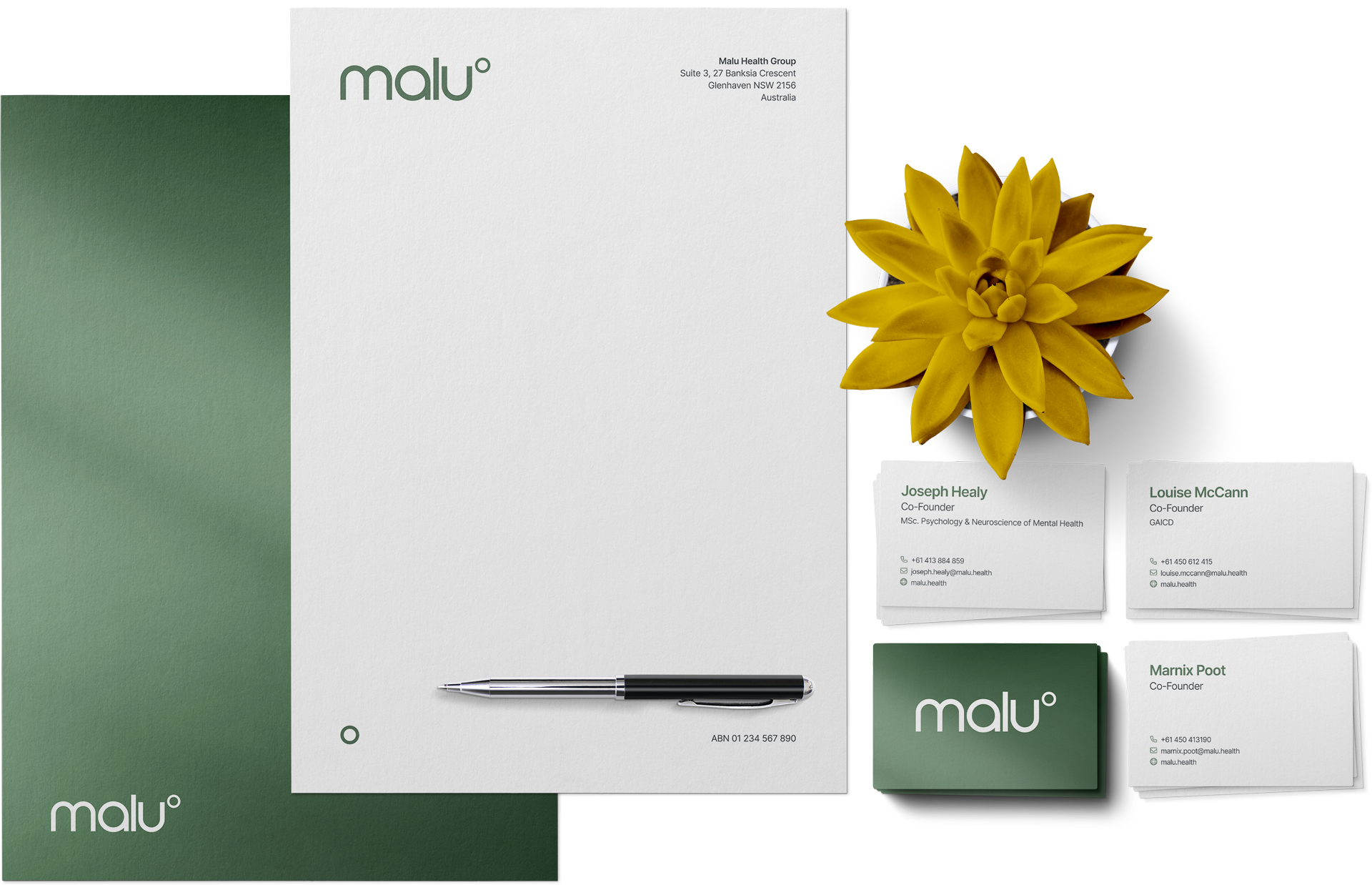
Malu started as a brand engagement, but it quickly became much more than that. I was initially brought in to create the identity system and brand foundations for a new mental health consultancy. Because I’d previously worked with one of the founders in a product-facing role, there was an existing level of trust, and once the brand work was underway, the scope expanded naturally into digital, marketing, and then product concepts.
The work ran in phases. The initial brand development was around three to four weeks of focused strategy and design. I stayed involved for around 8-9 months, leading the build of Malu’s digital presence and exploring early product directions that could support both clients seeking care and clinicians delivering it.



The Challenge
Malu needed to present as credible and premium from day one, without feeling cold or clinical. Mental health is an inherently high-trust space. People need to feel safe, understood, and respected before they will engage. At the same time, the organisation needed a brand system that could scale, be applied consistently across touchpoints, and hold up as the business grew into new services and potentially new clinics.
What made the challenge more interesting is that the founders were also thinking beyond launch. They were already asking how technology could support better care. Any product ideas in this space come with ethical constraints and professional standards. The brand and the product thinking had to reinforce each other, not pull in different directions.
My Role
I worked as the lead designer across brand, digital, and early product exploration. This included setting brand direction, creating the identity system, building the website in Framer, producing marketing and internal materials, and then moving into product concept work around client intake, clinician matching, and clinician support tools. I partnered closely with the founders and, where relevant, drew on clinical documentation standards and best-practice thinking to keep product concepts grounded in real-world care.
In the brand work specifically, I also collaborated with Hannah Montplaisir, who led brand strategy alongside me.
Brand Foundation, Built Around Biophilic Design
The identity was deliberately grounded in a clear design philosophy: biophilic design. The idea came from a conversation about recovery-focused health environments and the increasing integration of nature into spaces designed for healing and rehabilitation. That concept became the anchor for Malu’s tone and visual direction, because it offered something rare in the category: calm, warmth, and restraint, without losing professionalism.
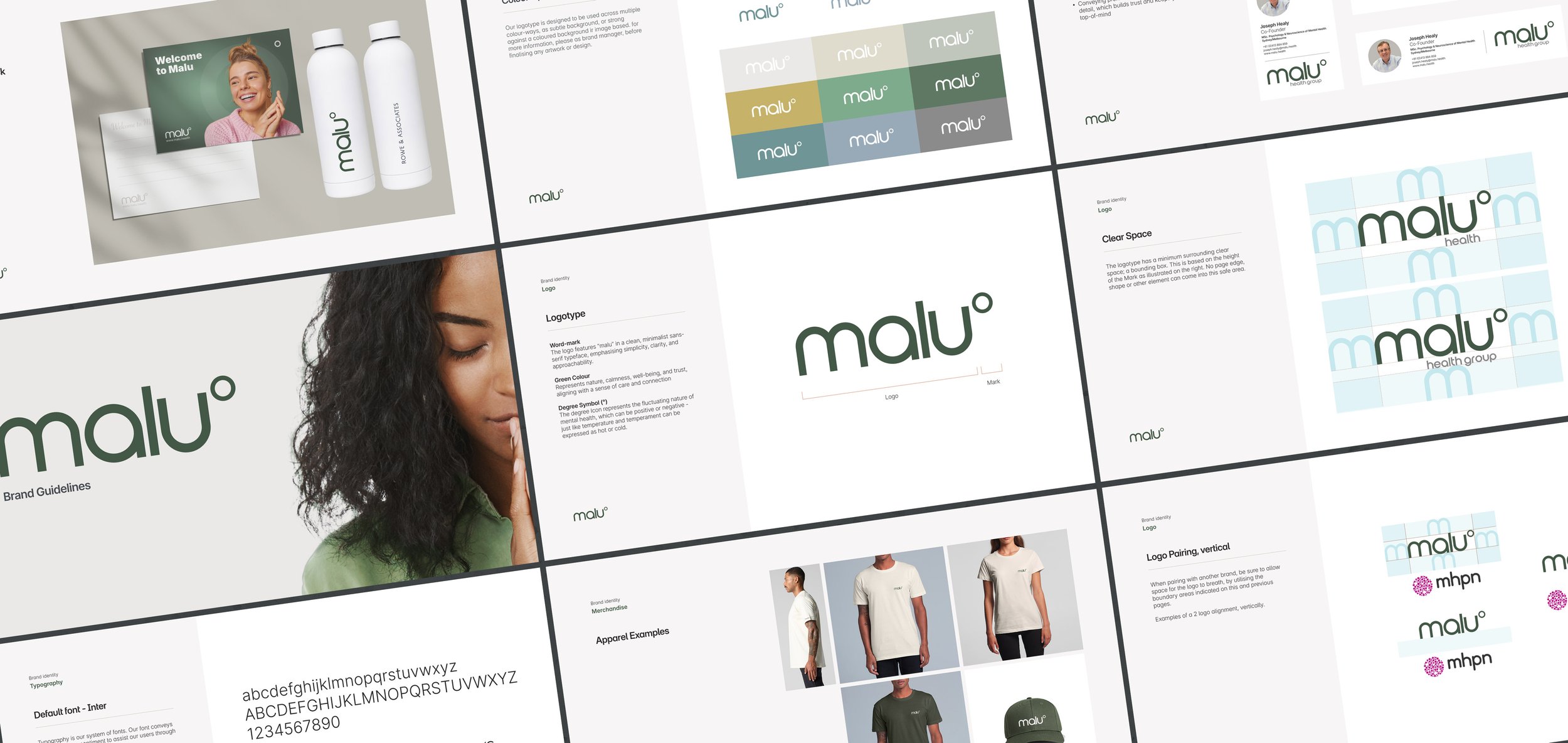
From there, I treated the brand like a system, not a logo. I ran comparative research across health and health-tech brands to identify common patterns, gaps, and opportunities, then used that insight to define a direction grounded in simplicity, confidence, and a premium feel.
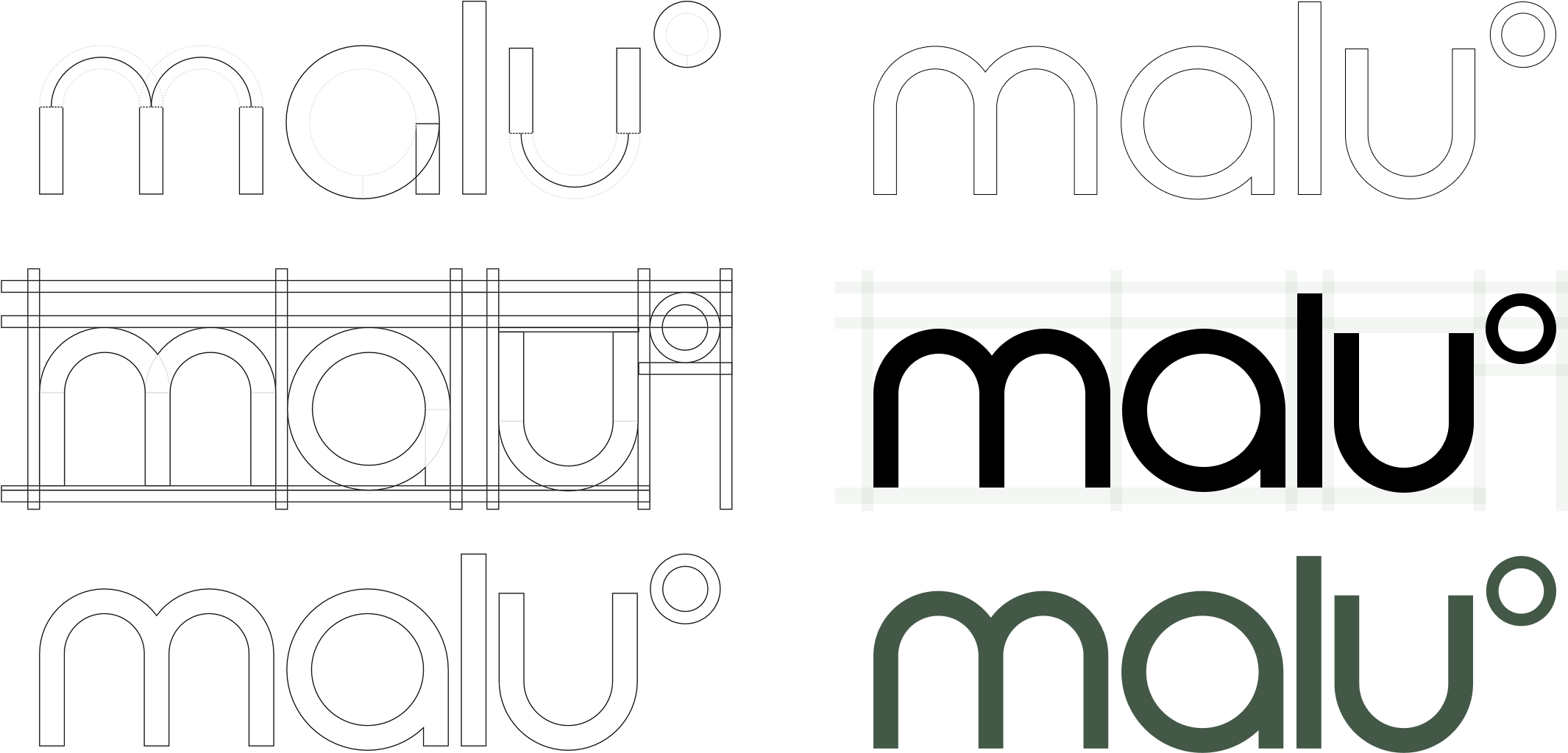
The logo and visual language were shaped to express that biophilic grounding through subtlety rather than decoration. The intent was to create something that felt balanced and trustworthy and could work consistently across digital and physical environments. The brand remained rooted in nature while remaining professional and future-ready.
Alongside the mark itself, I developed the typography system with an emphasis on simplicity and broad functionality, thinking through future use rather than just what looked good in a single layout. I also established an earthy, land-inspired colour palette and explored how it would behave across backgrounds, formats, and gradients, because the system needed to scale across real touchpoints, not just a brand board.
This first phase was the foundation Malu could build on, not a one-off identity exercise.
Website Build and Launch in Framer
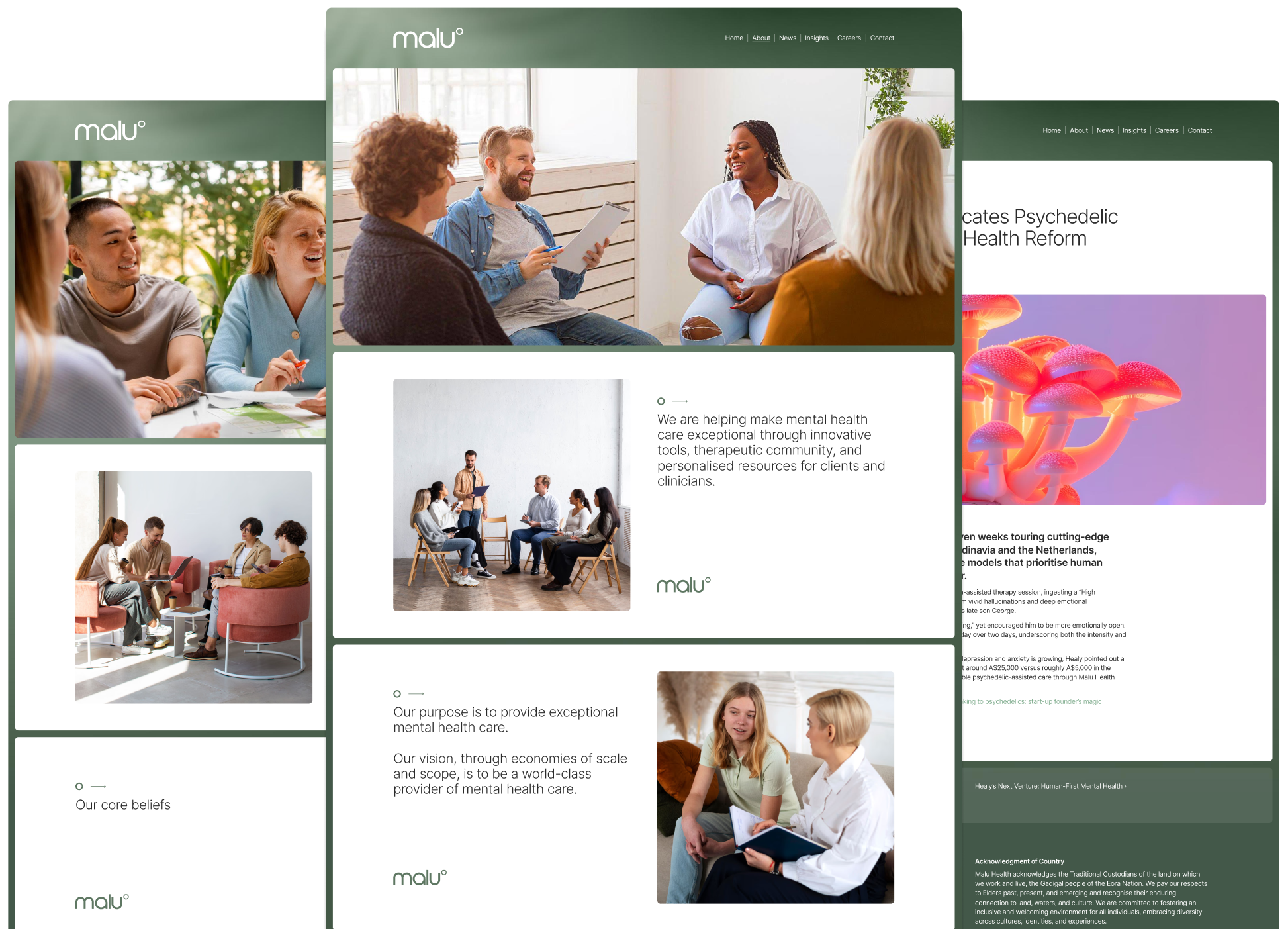
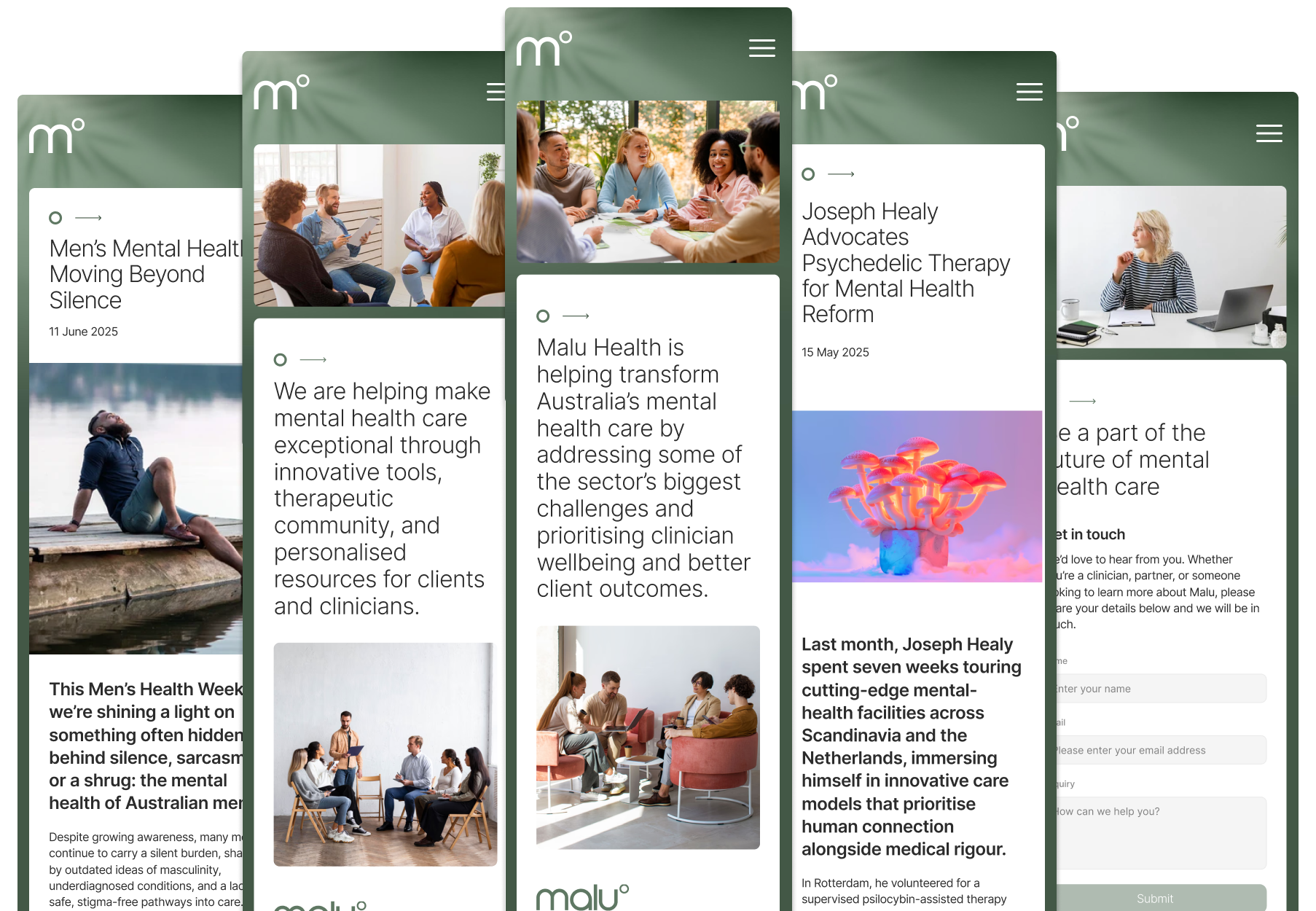
Once the core brand work was complete, I was tasked with creating Malu’s website from scratch. I designed and built it in Framer, a tool I had not used previously, and took it through to launch. The goal was to translate the biophilic brand idea into a digital presence that felt premium and calming, clearly explain Malu’s services, and build trust with prospective clients from the first visit.
This part of the engagement matters because it wasn’t “handoff to a web team”. I owned the design and build end-to-end, which meant making the brand system real in layouts, motion, content structure, hierarchy, and page-level storytelling.
Marketing, Internal Materials, and Early Go-to-Market Support
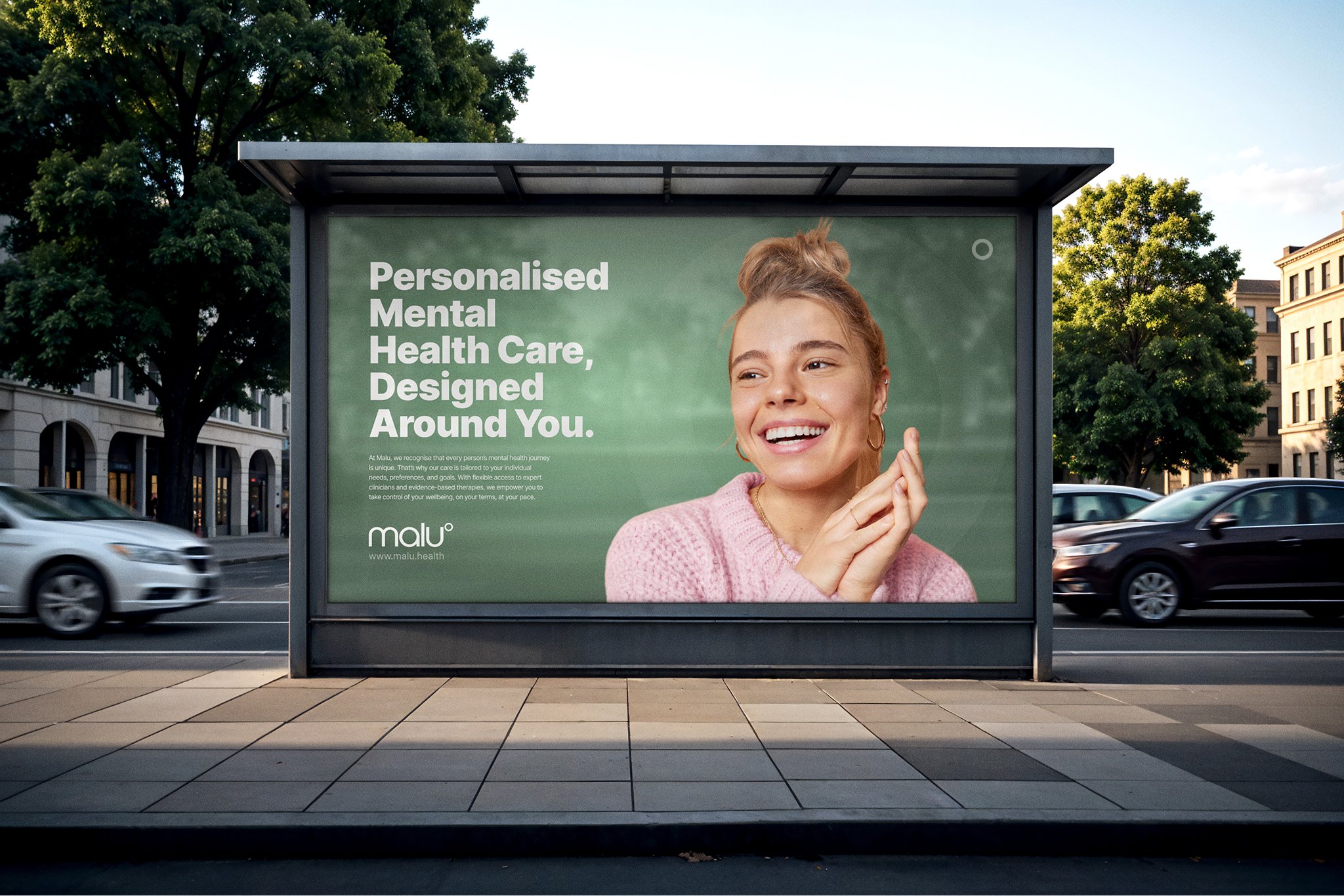
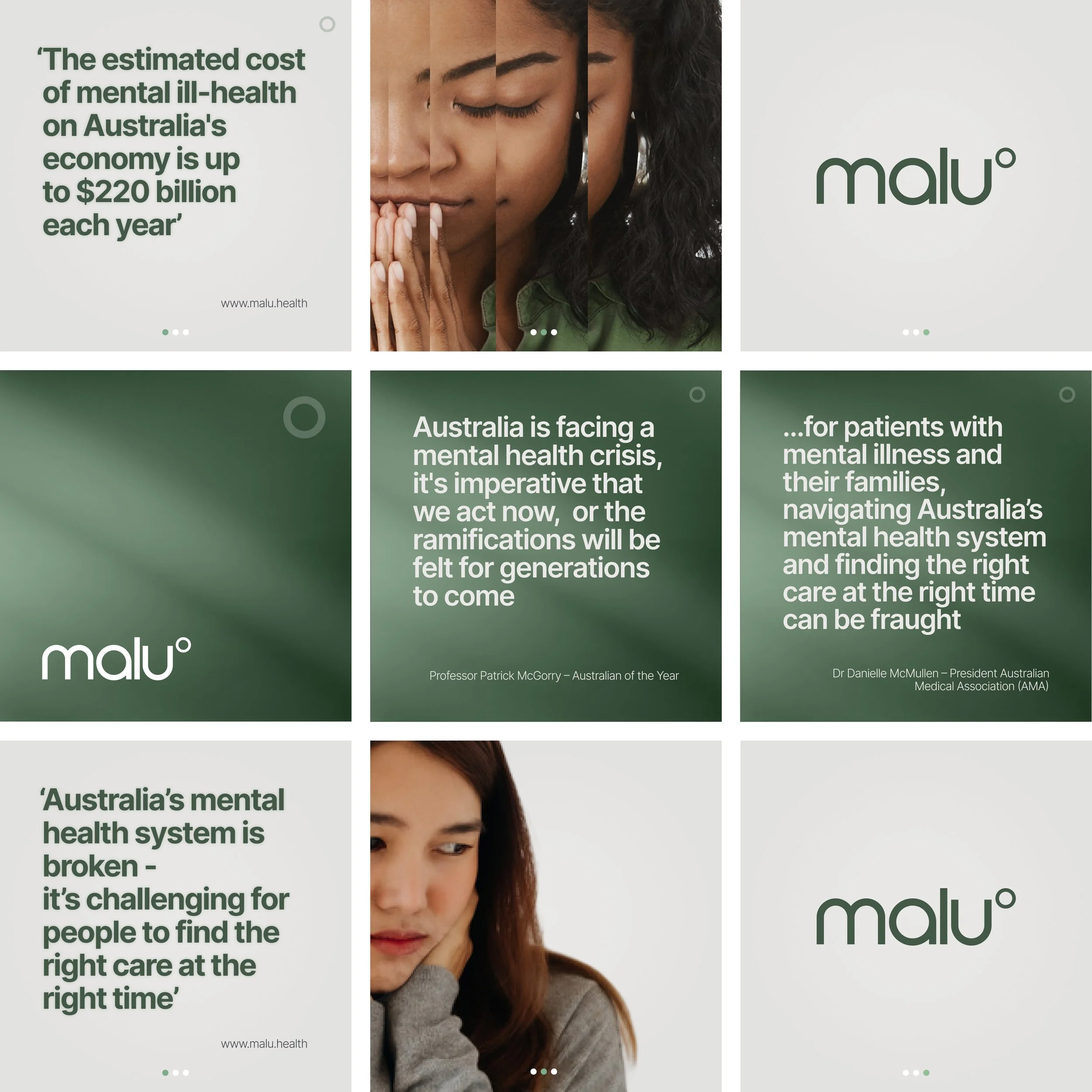
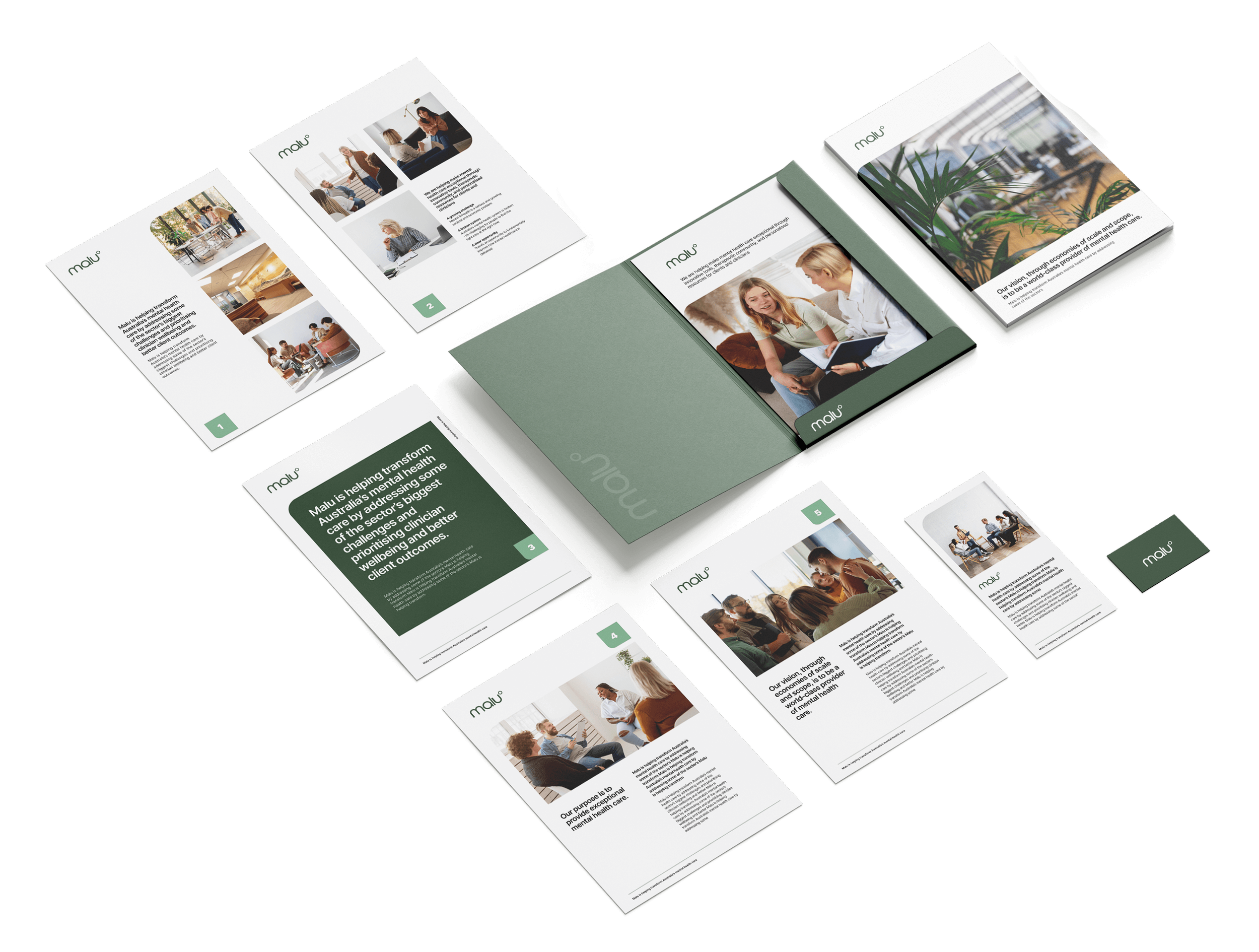
After launch, the work expanded into a broader set of practical needs: early marketing concepts, social and blog structures, internal slide decks, and customer-facing presentation materials. This wasn’t about “making assets”. It was about helping a new organisation communicate consistently as it found its feet and ensuring the brand system held up when applied in real-world contexts.
Product Concepts, Once the Foundation Was in Place
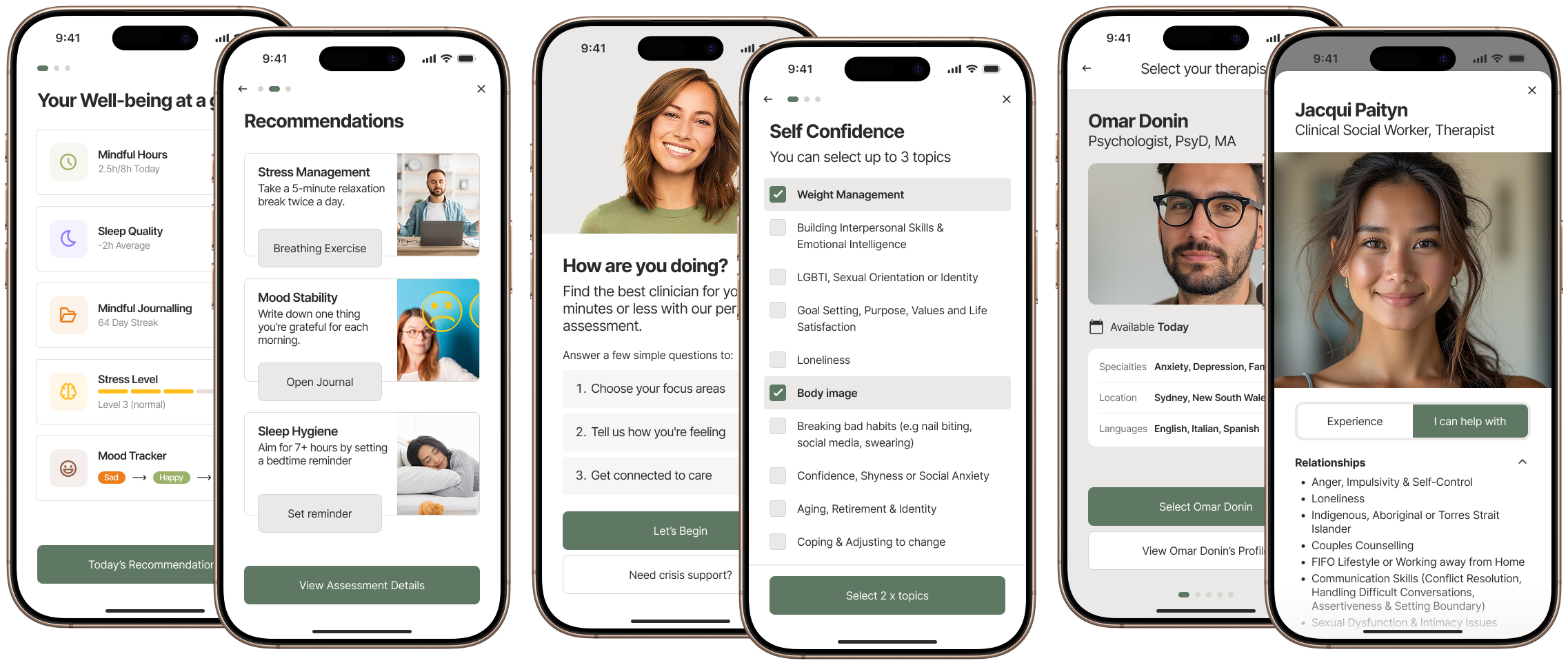
After the brand and presence were established, I was asked to explore product concepts that could support Malu’s longer-term ambition, particularly around intake and clinical workflows.
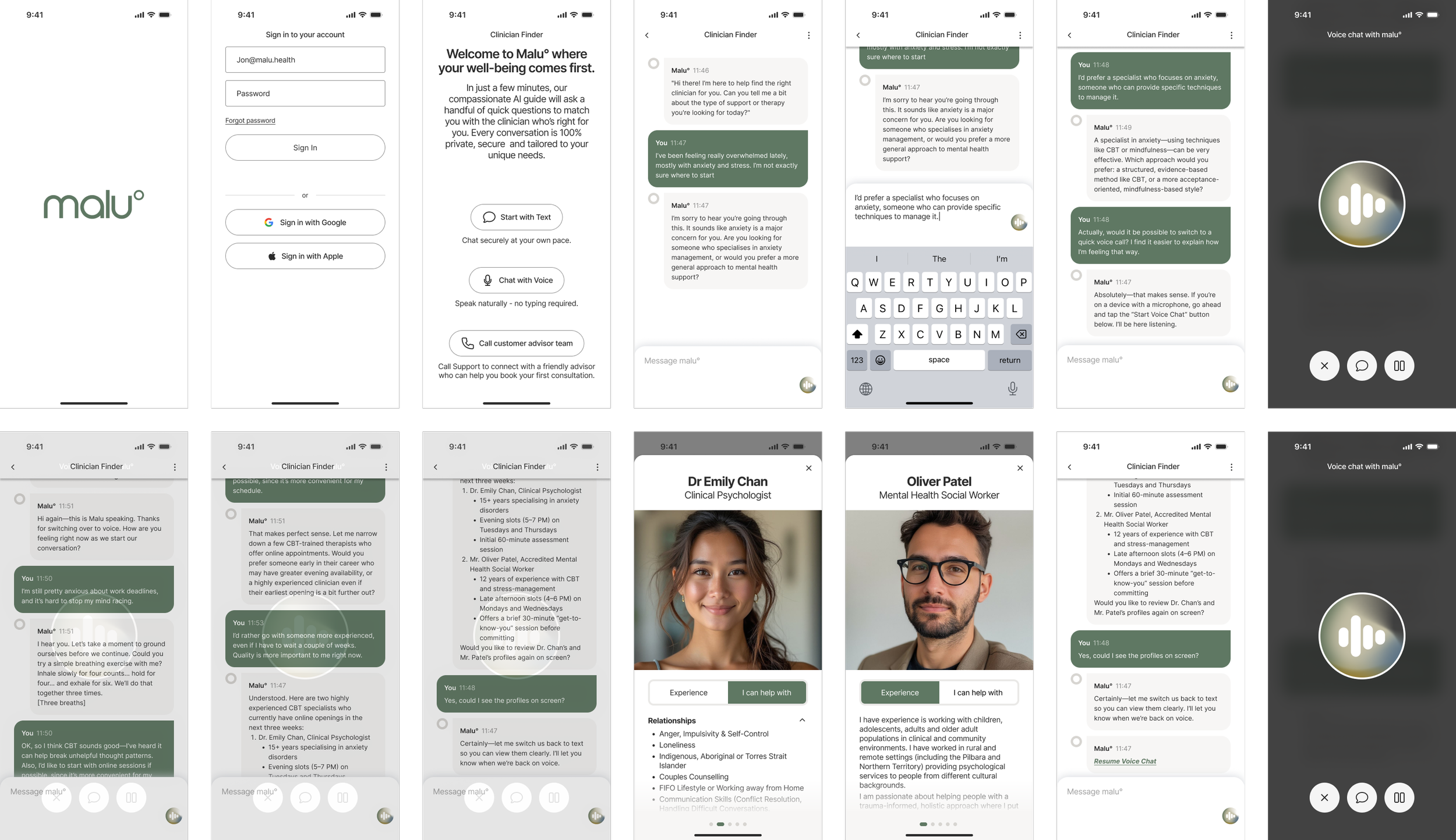
One concept focused on helping clients find the right clinician with less friction at the most vulnerable moment: when someone is trying to ask for help. Rather than forcing people into rigid forms and category filters, I explored a conversational interface that let users explain their situation in natural language, by typing or speaking. The underlying concept used AI to capture and summarise what mattered, guided by mental health documentation frameworks and best practice, so that when a suitable clinician was identified, the clinician would receive a clear, structured summary rather than a messy narrative.
The same flow extended into onboarding, where the system could hand off to a clinical secretary to confirm details and arrange a call, keeping the experience supportive and human rather than fully automated.
A second concept aimed to support clinicians during consultations. Transcription tools exist, but the opportunity was in helping clinicians pick up on conversational dynamics without distracting the client or making them feel analysed. I designed a concept where sentiment and temperament signals were represented through subtle colour gradients layered over the experience, more like an ambient screen than an explicit judgement. The intent was to provide the clinician with an additional reflective cue while maintaining a calm, non-performative client experience. With consent, sessions could be captured and summarised, with highlights aligned to key emotional shifts and areas of concern, supporting continuity across sessions and making note-writing more structured without removing professional judgement.
Later work broadened into exploratory thinking about in-house clinic management software, spanning intake, profiles, triage pathways, payments, learning resources, and self-help areas. Not all of this was fully explored, but it helped shape how Malu could scale operations without losing quality or clinical integrity.
Co-Branding for Acquisition and Scale
Toward the end of the engagement, I was asked to develop a co-branding strategy to support acquired clinics. The goal was to create a system that respected the identity of individual practices while bringing them into alignment with the Malu standard, both visually and operationally. I implemented this approach with a newly acquired clinician as one of the final pieces of work before stepping away.
Reflection
Malu was a rare project because it allowed me to work across the full stack of design problems, from identity and positioning through to digital presence and early product direction. It also reinforced a lesson that keeps showing up in high-trust environments: consistency and restraint matter. People don’t just need an attractive design. They need to feel that the system, the organisation, and the experience are coherent, predictable, and safe.
The biophilic foundation was not a stylistic choice. It was a way of expressing care and calm in a category that often defaults to sterile or overly corporate language. The later product concepts followed the same principle. They weren’t built to replace clinicians or automate care. They were aimed at lowering friction, preserving nuance, and supporting professional judgement.
“Jonathan brought exceptional design capability and a thoughtful, system-level approach to Malu’s development. His input was invaluable in shaping the platform, and he consistently delivered high-quality work while adapting to evolving needs. I would gladly work with him again.”
— Co-Founder &CFO, Malu Health Group